What You're Wearing Underneath Is Doing More Work Than You Think
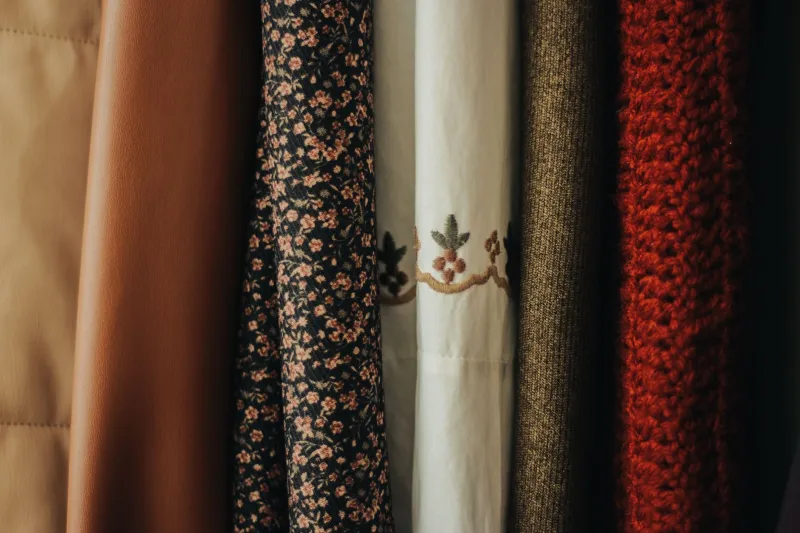
Here's a question most style guides skip entirely: what are you wearing right now that nobody else can see?
Not rhetorical. Genuinely — what's underneath? Is it intentional? Does it fit? Does it do anything? Because here's the thing about dressing in more than two dimensions: the visual layer is only the beginning. The real architecture of a great outfit is happening somewhere most people never think to look.
This is what we'd call the depth test. And very few wardrobes pass it.
The Surface Is a Symptom, Not the Source
When someone walks into a room and commands attention without trying, we tend to credit the obvious stuff — a sharp jacket, a great pair of shoes, a color that works. But that explanation is incomplete. What you're actually responding to is presence, and presence doesn't come from a single visible layer. It comes from the structural integrity of the whole thing.
Think about the difference between a blazer worn over a thin, ill-fitting undershirt versus the same blazer worn over a properly fitted base layer that supports the silhouette. The jacket looks identical from ten feet away. But up close, in motion, in conversation — one version holds. The other doesn't. That difference is depth, and it's felt before it's seen.
Multidimensional style has always understood this. A look isn't a flat image. It's a system of decisions stacked on top of each other, and the decisions you make at the foundation determine how everything above it performs.
Layering as Architecture, Not Decoration
Most people layer for warmth or for visual interest — a flannel over a tee, a cardigan over a blouse. Both are legitimate reasons. But layering architecturally is a different practice entirely.
Architectural layering means thinking about what each layer is doing structurally. A fitted ribbed turtleneck under a loose blazer isn't just a style choice — it's a counterweight. It creates tension between fitted and relaxed, and that tension reads as intentionality. A compression base layer under tailored trousers changes how you carry yourself; the slight support affects your posture, which affects how the pants drape, which affects how the whole outfit lands.
This is the kind of layering that doesn't show up in a flat-lay photo but absolutely shows up in real life. It's the layer doing the quiet structural work.
A few principles worth keeping in mind:
- Weight distribution matters. Heavier fabrics underneath lighter ones create a grounded, anchored silhouette. The reverse — heavy on top of light — can feel chaotic and unresolved.
- Fit cascades. A poorly fitted base layer will undermine every layer above it. The foundation has to be right before anything else can work.
- Texture contrast at the hidden edges counts. The cuff of a fitted thermal peeking out from under a rolled sleeve isn't an accident in a well-dressed outfit — it's a detail that rewards a second look.
The Psychology of Hidden Detail
There's a concept in design sometimes called the gift for the maker — the idea that craftspeople will sometimes add intricate detail to the hidden parts of an object, the parts no one will ever see, simply because they know it's there. It changes the integrity of the whole thing.
Dressing works the same way.
When you're wearing something underneath your outfit that's genuinely considered — a well-chosen underlayer, a piece of sentimental jewelry under a collar, even a pair of socks you picked with intention — it changes the way you move through your day. This isn't mysticism. It's psychology. Knowing that your outfit is complete and deliberate all the way down creates a kind of internal coherence that projects outward as confidence.
This is why the people who dress best often describe their style as being for themselves first. Not performatively — genuinely. The parts nobody else sees are the parts that matter most to them. That's not vanity. That's structural self-respect.
Strategic Weight and the Feel of an Outfit
Fashion conversations focus heavily on how clothes look. But how they feel — physically, on your body, throughout a day — is an equally important dimension that most style advice ignores.
Weight is a major factor here. A well-constructed garment with some heft to it changes how you carry yourself. Heavy wool trousers encourage a slower, more deliberate stride than lightweight chinos. A structured jacket with some substance to the shoulder makes you stand differently than a flimsy unlined version of the same shape. These aren't small differences. They compound across a day.
When you're building an outfit with depth, think about the total weight and how it's distributed. An outfit that's too heavy on top and too light on the bottom feels unstable — you'll fidget, adjust, and eventually feel underdressed even in something technically appropriate. Balance the weight across your silhouette and you'll find you stop thinking about your clothes entirely, which is the actual goal.
The Invisible Finishing Touches That Visible Ones Depend On
A great outfit has visible finishing touches — the right belt, a clean hem, shoes that close the look. But those details only land if the invisible finishing touches are in place first.
We're talking about the things that aren't meant to be seen but make everything else possible:
- Properly fitted undergarments that don't create lines, bulk, or distortion through outer layers.
- Shoe insoles and inserts that distribute weight evenly, affecting both comfort and gait — both of which affect presence.
- Underlining or interfacing in structured pieces — the internal architecture of a well-made garment that gives it its shape even after hours of wear.
- A well-maintained interior — the lining of a coat, the inner seams of a blazer. These don't show, but wearing something that's deteriorated on the inside affects how you feel wearing it.
None of this is glamorous. But this is where multidimensional dressing actually lives — in the unglamorous infrastructure that makes the glamorous surface possible.
Dressing With Depth Is a Practice, Not a Purchase
The good news is that none of this requires a bigger budget or a completely new wardrobe. Dressing with depth is a practice — a way of paying attention that most people simply haven't been taught to apply to their clothes.
Start with one layer at a time. The next time you get dressed, ask what your base layer is doing. Is it earning its place? Then work outward. Is each layer in conversation with the one beneath it? Is the weight balanced? Is there at least one detail — visible or not — that you chose with intention rather than convenience?
That's the depth test. And once you start applying it, you'll notice the difference — not necessarily in the mirror, but in the way you move, the way you carry yourself, and the way other people respond to you before you've said a single word.
That's not aesthetics. That's architecture. And it's what style beyond dimension actually looks like.