Built to Last a Lifetime: The Case for Clothes That Only Get Better With Age
There's a particular kind of satisfaction that comes from pulling on a jacket you've owned for twelve years. The leather has softened exactly where your elbows bend. The lining has settled into a shape that's basically yours now. It fits differently than it did the day you bought it — not worse, just more. More lived-in. More dimensional. More you.
That experience isn't an accident. It's the result of intentional design, quality construction, and — honestly — a little bit of patience in a culture that's pretty allergic to waiting for anything.
At 4D Apparel, we talk a lot about style that moves through dimensions — through time, context, and personal evolution. Nothing embodies that idea more completely than clothing that genuinely improves with wear. So let's get into what that actually looks like, and why it's worth caring about.
The Difference Between Aging and Degrading
Not all wear is equal. A fast-fashion polyester blend that pills after six washes isn't aging — it's degrading. It's losing structural integrity because it was never built to hold up in the first place. That's the milk model of clothing: designed with a shelf life, not a life span.
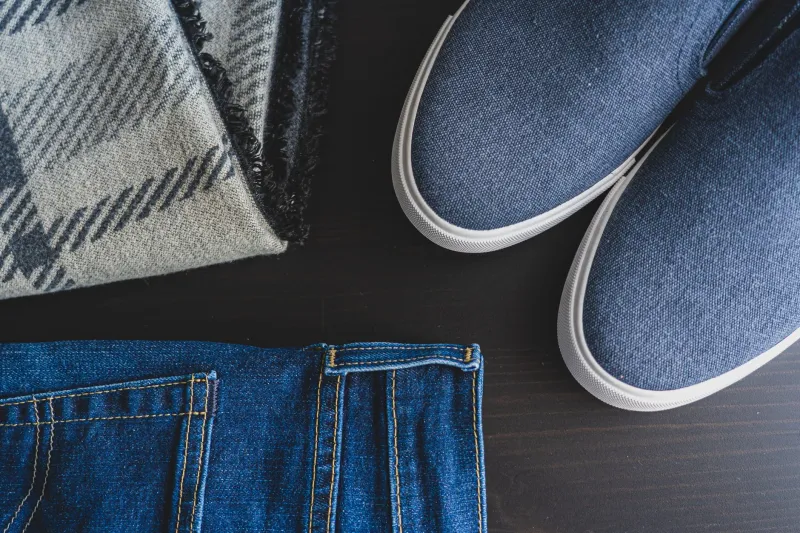
The wine model is different. Certain fabrics, cuts, and construction methods are specifically engineered to develop rather than deteriorate. Raw selvedge denim is the most famous example — those jeans literally mold to your body over months of wear, creating fade patterns and creases that are completely unique to how you move. No two pairs of well-worn raw denim look the same, because no two people wear them the same way.
Waxed canvas jackets follow a similar logic. The wax coating breaks down slowly in the areas that see the most friction — collar edges, cuffs, pockets — creating a patina that maps your actual life. A Filson or Barbour jacket owned for twenty years tells a story that a brand-new one simply can't.
Leather goods, heavyweight wool, and densely woven natural linens all operate on this same principle. They're materials built with enough structural density that time works for them rather than against them.
Construction Is the Hidden Variable
Fabric choice matters enormously, but construction is where longevity actually gets made or broken. The details most shoppers never think about are often the ones that determine whether a piece lasts two years or twenty.
Full canvas suit construction, for example, involves a layer of horsehair or wool canvas that's hand-stitched between the outer fabric and the lining. This method — versus the cheaper fused construction used in most mass-market suits — allows the jacket to drape better and better over time as the canvas molds to your chest. A fused jacket starts to bubble and separate after a few dry cleanings. A full canvas jacket just keeps improving.
Similarly, reinforced seams, bar tacking at stress points, and horn or corozo buttons (rather than plastic) are all small construction details that dramatically extend the functional life of a garment. These aren't luxury flourishes — they're engineering decisions that determine the trajectory of a piece over years.
When you're shopping, it's worth flipping a garment inside out. The interior finish tells you a lot. French seams, bound seams, and clean interior construction signal that the maker was thinking about longevity. Exposed, overlocked seams that are already fraying in the store? That's your answer right there.
The Economics Actually Work Out
Here's the part that tends to surprise people: buying for longevity is almost always cheaper in the long run, even when the upfront cost is significantly higher.
Run the math on a $40 fast-fashion shirt that you replace every eight months versus a $180 well-constructed Oxford cloth button-down that you wear for a decade. The fast-fashion shirt costs you roughly $60 a year. The quality shirt costs $18 a year — and that's before you account for the fact that it probably fits and looks better the whole time.
This isn't a niche argument. It's basic cost-per-wear math that the fashion industry would really prefer you didn't think about too hard. A $450 pair of quality leather boots worn for fifteen years works out to $30 a year. The $80 boots you replace every eighteen months cost you more than $53 a year and end up in a landfill multiple times over.
The investment model of dressing isn't just for people with money to spend. It's actually the more financially rational approach for almost anyone — it just requires front-loading the cost, which is admittedly harder when your budget is tight right now.
Vintage Pieces That Transcended Their Original Purpose
Some of the most compelling evidence for the longevity model is already hanging in closets and vintage shops across the country.
Levi's 501s from the 1950s and 60s — originally workwear — are now collector's items that sell for thousands of dollars. They weren't designed to be fashion pieces. They were designed to withstand hard physical labor. That construction quality is precisely what made them culturally durable enough to become iconic.
Military surplus clothing follows the same arc. M-65 field jackets, originally issued to U.S. troops in the Vietnam era, became counterculture symbols in the 70s, grunge staples in the 90s, and are still being worn and styled today. The reason they keep showing up is simple: they were built to survive, and they did.
Even within living memory, pieces like the classic Levi's trucker jacket, the Carhartt Detroit jacket, and the original New Balance 990 sneaker have all demonstrated the same pattern — quality construction that outlasts the trends that originally surrounded it, eventually becoming something more timeless than trendy.
Timeless Design vs. Trend-Proof Design
It's worth making one important distinction here: timeless design and trend-proof design aren't quite the same thing.
Timeless design refers to silhouettes and details that have proven staying power — the straight-leg trouser, the white Oxford shirt, the single-breasted overcoat. These are shapes that have been relevant for decades and will likely remain relevant for decades more.
Trend-proof design is slightly different — it's about choosing pieces that are distinctive enough to feel intentional, but not so trend-specific that they'll read as dated in three years. A really well-made, slightly oversized blazer in a neutral tone isn't chasing a trend. It's a considered piece that can be styled in multiple directions across multiple eras.
The goal when building a longevity-focused wardrobe is to look for pieces that hit both criteria — timeless in silhouette, quality in construction, and just interesting enough to feel like a genuine choice rather than a default.
Caring for the Long Game
None of this works without maintenance. Clothing that's built to last still needs to be treated accordingly. Washing denim inside out in cold water. Brushing wool to remove surface debris before it works into the fibers. Cedar blocks in your closet to protect against moths. Proper hanging (wooden hangers for structured pieces, folding for knits) to preserve shape.
This stuff isn't complicated, but it does require treating your clothes as something worth caring for — which, if you've invested in them properly, they are.
The wardrobe that grows with you isn't built overnight. It's assembled deliberately, worn intentionally, and maintained with just enough attention to let time do its thing. That's the fourth dimension that most closets are missing — not just how clothes look today, but who they'll be in ten years.
And honestly? That version is usually the most interesting one.