Static Is Dead: How Gen Z Is Forcing Fashion Brands to Think in More Than Two Dimensions

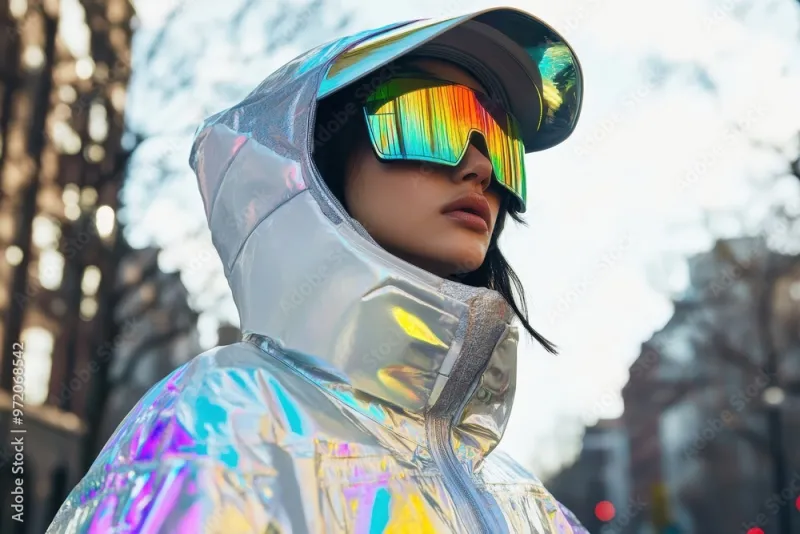
Photo by Photo by Gaining Visuals on Unsplash on Unsplash
Let's be real about something: the standard e-commerce product photo is kind of a lie.
Front view. Back view. Maybe a side profile. Model standing perfectly still against a white or off-white background, expression neutral, hands at her sides. The garment looks fine. But does it tell you anything about how it moves? How it drapes when you sit down? How the fabric catches light when you're walking into a room?
Not really. And for a generation that grew up swiping, scrolling, and interacting with content in increasingly dynamic ways, "fine" is a dealbreaker.
Gen Z isn't just a demographic. They're a signal. And right now, they're telling the fashion industry—loudly—that two-dimensional product presentation belongs in the past.
Raised on Interactivity, Bored by Passivity
Think about the media environment that shaped Gen Z's relationship with content. Snapchat lenses that mapped to their faces in real time. TikTok's For You Page, endlessly responsive to their behavior. Games like Fortnite and Roblox where they decide what their avatar wears, how it moves, what it looks like from every angle.
These aren't passive experiences. They're participatory ones. And when you've spent formative years interacting with digital environments that respond to you, a static JPEG of a hoodie just doesn't compute as a satisfying shopping experience.
A 2023 report from Snap Inc. found that Gen Z shoppers are significantly more likely to purchase a product after experiencing it through augmented reality than through traditional photos. That's not a niche preference—it's a behavioral shift with serious commercial weight.
Fashion brands that haven't noticed are going to feel it in their conversion rates.
The Problem With Flat Photography
Here's the fundamental issue: clothing is a three-dimensional object designed to interact with a moving human body, and the industry has been trying to sell it through a medium that strips out both of those dimensions.
Flat photography can tell you color and approximate shape. That's about it. It cannot tell you how a fabric behaves under tension, how a hem falls when you're walking, whether a shoulder seam sits right on someone who isn't a sample-size fit model. For tactile, body-conscious products like apparel, this is a massive informational gap.
Gen Z has grown up with enough online shopping experience—and enough "this looks nothing like the photo" returns—to be deeply skeptical of static imagery. They want proof of life before they commit.
What "Dimensional" Fashion Content Actually Looks Like
The good news is that brands are starting to get creative about filling that gap. Here's what's actually moving the needle:
Video-first product presentation. Not a polished lookbook video—raw, real, moving. TikTok-style try-on content, whether from brands or creators, shows garments in actual motion on actual bodies. The fabric swishes. The silhouette shifts. You see the piece breathe.
3D product configurators. A handful of forward-thinking brands are already letting shoppers rotate garments 360 degrees, zoom into texture details, and even toggle between colorways in real time. It's the closest thing to holding a piece in your hands without being in a store.
AR try-on tools. Snapchat, Instagram, and dedicated apps have made it possible for shoppers to see how a piece looks on them, using their own camera and their own body as the canvas. Adoption is still growing, but the engagement numbers are hard to argue with.
Creator-driven authenticity. Gen Z trusts people over brands. When real people—with real proportions and real wardrobes—show how a piece fits into their actual life, that's more persuasive than any brand-produced campaign. The mess of a real bedroom in the background isn't a bug. It's a feature.
Why This Matters Beyond Marketing
This isn't just a conversation about photography budgets or social media strategy. It's a conversation about what fashion is in a digital-first world.
If clothing is, at its core, about expression and identity—how you present yourself to the world, how you feel moving through it—then the way we experience clothing before we buy it should reflect that. A flat photo doesn't capture identity. It captures inventory.
Gen Z understands this intuitively, even if they'd never put it in those terms. They're not asking for gimmicks. They're asking for truth. Show me how this actually looks. Show me it in motion. Show me it on someone who looks like me, living a life that resembles mine.
That's not an unreasonable ask. It's actually the most logical ask in the world.
Where 4D Apparel Fits In
At 4D Apparel, the idea that clothing exists beyond a single static moment isn't just a marketing position—it's foundational to how we think about design. Clothes are meant to move, layer, transform, and evolve with the person wearing them. It follows that the way we show clothes should reflect that same philosophy.
The brands that are going to win with Gen Z—and honestly, with all of us who've been quietly frustrated by the limitations of traditional product photography—are the ones willing to think dimensionally. To show the fourth dimension: time, movement, real life.
Because style isn't a still image. It never was. And it's about time the way we shop started reflecting that.
The Takeaway for Brands
If you're still leading with a front-and-back product shot on a white background as your primary selling tool, it's worth asking: what is that image actually communicating? And is it enough?
For a generation that experiences the world interactively, the answer is increasingly no. The brands that adapt—that invest in video, in 3D, in AR, in creator partnerships that feel genuine—aren't just staying relevant. They're building the kind of trust that turns browsers into buyers and buyers into loyal communities.
Static is dead. The question is what you're building in its place.