Stop Dressing for Forever: The Case for Clothes That Know What Time It Is

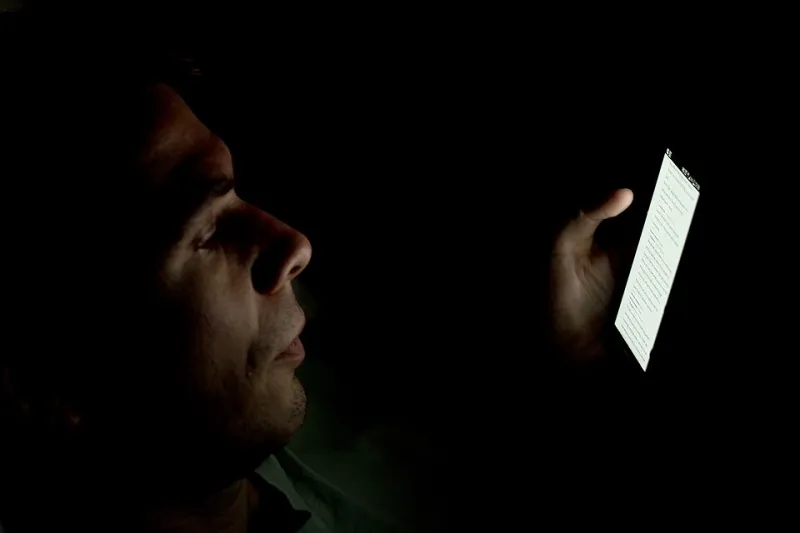
Photo: Kalicja, CC BY-SA 4.0, via Wikimedia Commons
Somewhere along the way, fashion decided that the highest praise it could offer a piece of clothing was to call it timeless. The perfect white shirt. The little black dress. The trench coat that works for everything, forever, across every era and occasion and version of your life. We've been chasing this idea like it's a destination—a wardrobe so carefully curated that it exists outside of time entirely.
I want to make the case that this is completely the wrong goal.
Not because classics don't have value—they do. But because the obsession with timelessness has quietly trained us to distrust clothing that's specific. Specific to a moment, a mood, a phase, a feeling. And in doing that, we've cut ourselves off from one of the most interesting things fashion can actually do: tell time.
What Temporal Fashion Actually Means
Let's define the term, because it's not about trend-chasing or fast fashion or throwing out your wardrobe every season. Temporal fashion is the philosophy that clothing should be honest about when it exists—and that this specificity is a feature, not a flaw.
A temporal wardrobe reflects where you are right now. The job you're in, the city you're living in, the relationships that are shaping you, the music you can't stop listening to, the version of yourself that's actually showing up every day. It changes because you change, and it's designed to move with you rather than anchor you to some fixed, aspirational ideal.
This is fundamentally a more dimensional way of thinking about clothes. Instead of asking will this work in ten years, you ask does this work right now, and does it work well. That's a different question, and it tends to produce more honest, more interesting answers.
The Myth of the Timeless Piece
Here's the thing about timeless clothing: it doesn't actually exist in the way we pretend it does. The trench coat, that perennial icon of classic style, is a product of early 20th-century military design. The white button-down has been through at least a dozen distinct cultural reinventions, from prep school staple to power-dressing signal to oversized streetwear piece. The little black dress was a radical statement when Chanel introduced it in the 1920s—it was anything but neutral.
What we call timeless is usually just well-traveled. These pieces have moved through enough cultural contexts that they've accumulated a kind of flexibility. But that flexibility was earned through time and change, not by existing outside of it.
And here's the quiet problem with the timeless myth: it creates a hierarchy where anything that feels contemporary is implicitly less valuable. Clothes that are clearly of their moment—that carry the aesthetic fingerprints of right now—get dismissed as fleeting, disposable, not worth investing in. But some of the most meaningful clothing people own is exactly that kind of piece. The jacket that defined a specific summer. The outfit worn to a concert that changed how you thought about music. The dress that felt like a turning point.
Those pieces are temporal. And they're often irreplaceable.
Dressing in Chapters
One of the most useful mental models for temporal fashion is thinking about your wardrobe in chapters rather than as a single, continuous collection. Each chapter of your life has its own aesthetic logic—shaped by where you live, what you're doing, who you're spending time with, and how you're feeling about yourself.
This doesn't mean you throw everything out between chapters. Some pieces genuinely do carry forward, and that's fine. But it does mean giving yourself permission to let your wardrobe reflect each chapter rather than trying to maintain some consistent, era-agnostic identity across all of them.
In your mid-twenties living in a city, your wardrobe might lean into a kind of polished-casual energy—clothes that can move from a desk to a bar without a costume change. In a different chapter, maybe you're more settled, more intentional, drawn to quality over versatility. In another, you might be in full creative experimentation mode, trying on aesthetics the way you try on ideas. None of these wardrobes is more correct than the others. They're just different chapters.
Allowing your clothes to tell that story—rather than trying to dress in a way that would work in any chapter—is what temporal fashion is really about.
The Single-Day Dimension
Temporal fashion also operates on a much smaller scale than life chapters. It operates within a single day.
Think about how many distinct modes you move through between waking up and going to sleep. The early morning version of you that wants comfort and zero friction. The professional version that needs to signal competence and presence. The after-work version that wants to decompress and feel like yourself again. The late-night version that might want to go somewhere and actually be seen.
Most wardrobes are built to handle maybe one or two of these modes. The rest is improvisation, or just wearing the same outfit through contexts it doesn't quite fit.
Building temporal awareness into how you dress means thinking about your actual day—not an idealized version of it—and choosing pieces that can honestly move through its different phases. This might mean a blazer that comes off at 5pm, a shoe swap kept in a bag, a layer that transforms the entire register of an outfit. It's not about having more clothes. It's about choosing clothes that understand time.
Why This Builds Better Wardrobes
Counter-intuitively, letting go of timelessness as the goal actually produces more useful and more lasting wardrobes. Here's why: when you're honest about what you need right now, you make better purchasing decisions. You stop buying the aspirational piece that fits a life you don't quite have yet, and start buying things that genuinely work in your actual life.
You also stop holding on to things out of guilt. If a piece was perfect for a previous chapter but genuinely doesn't fit the current one, temporal thinking gives you permission to let it go—without the nagging feeling that you're abandoning something classic you should be keeping forever.
And perhaps most importantly, you start building a wardrobe that feels like you—specifically you, right now—rather than a wardrobe that feels like a carefully constructed performance of good taste.
The Most Sophisticated Thing You Can Wear
There's a version of personal style that's about projecting stability. Consistency. A refined, unchanging aesthetic that signals you've figured it out. And there's real appeal in that.
But there's another version of personal style that's about honesty. About letting your clothes reflect where you actually are, what's actually happening, who you're actually becoming. That version is messier, more fluid, and significantly more interesting.
Timelessness is a comfortable fiction. Temporal fashion is the real thing. And right now—specifically right now—that's exactly what your wardrobe should be chasing.