The More You Buy Right, The Less the Planet Pays: Rethinking Fashion's Sustainability Math
For the better part of a decade, the sustainability conversation in fashion has circled the same drain: buy less, own less, want less. It's a tidy narrative, and it feels virtuous in the way that only genuine sacrifice can. But here's the uncomfortable truth that most eco-conscious fashion coverage quietly sidesteps — buying less isn't automatically better for the planet. Not even close.
The real environmental villain isn't your shopping cart. It's what ends up in it.
The Lifecycle Lie We've All Been Sold
When environmental researchers talk about a garment's true footprint, they're not just counting the carbon burned to ship it to your door. They're tracking raw material extraction, water consumption during manufacturing, chemical runoff from dyeing processes, transportation at every stage of the supply chain, and — critically — how long the piece actually stays out of a landfill.
That last variable is where the 'buy less' crowd tends to get quiet.
A $30 fast-fashion top that gets worn six times and tossed has a per-wear environmental cost that would make your head spin. A $180 structured jacket engineered to transition from a morning meeting to a weekend dinner — worn 200 times over five years — is an entirely different equation. When you divide the total lifecycle impact by actual uses, the math shifts dramatically in favor of the more intentional, higher-quality purchase.
The Ellen MacArthur Foundation has been sounding this alarm for years: the average garment in the US is worn fewer than ten times before it's discarded. That's not a 'too much consumption' problem in isolation. That's a consumption quality problem.
The Hidden Cost of Constant Micro-Replacements
Here's a scenario that plays out in American closets constantly. Someone commits to a minimalist wardrobe — say, 30 pieces — and decides they'll only buy when something wears out. Sounds responsible, right? But if those 30 pieces are built from materials that pill after fifteen washes, lose structural integrity by year two, and can only function in one specific context, the replacement cycle kicks in fast.
Sudden, those 30 pieces become 30 pieces every two years. Then every eighteen months. The minimalist framework holds, but the environmental output doesn't.
This is what we'd call the micro-replacement trap. It's the sustainability paradox hiding in plain sight: a closet that looks disciplined on paper but generates a steady, low-grade stream of textile waste that never gets counted in the 'I only buy what I need' self-assessment.
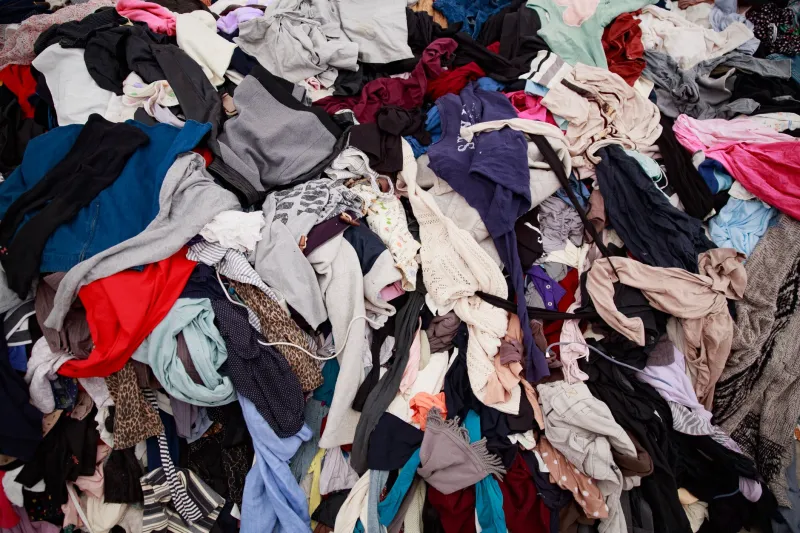
The fashion industry produces an estimated 92 million tons of textile waste per year globally. A significant chunk of that isn't coming from maximalist shoppers with overflowing closets. It's coming from well-intentioned consumers cycling through cheap replacements faster than they realize.
Multidimensional Garments Change the Equation Entirely
This is where the conversation about design philosophy becomes genuinely inseparable from the conversation about environmental impact. A piece engineered to operate across multiple contexts — different styling combinations, different seasons with minor layering adjustments, different formality registers — isn't just a style asset. It's a sustainability asset.
Think about what it means for a single garment to replace three. Not because you're wearing one thing obsessively, but because it's built with enough versatility and structural integrity to handle the full range of your life. That's fewer units manufactured, fewer raw materials extracted, fewer shipping miles logged, and fewer items eventually hitting a landfill or donation bin that's already overwhelmed.
At 4D Apparel, this is the design logic we keep coming back to: clothing that works in more dimensions of your life isn't just more stylish. It's more responsible. Style beyond dimension isn't a marketing angle — it's a functional argument for reducing the total number of things you need to own without reducing the quality or range of your actual wardrobe.
Quality Metrics That Actually Matter
Not all 'high-quality' claims are created equal, and the sustainable fashion space has its share of greenwashing. So what should you actually be evaluating when you're trying to make a smarter, longer-lasting purchase?
Fabric weight and composition. Heavier fabric weights in natural or responsibly sourced blended materials tend to hold structure longer. Look for tightly woven textiles rather than loosely constructed ones that stretch out of shape quickly.
Construction details. Reinforced seams, quality stitching density, and finished interior edges are signs of a garment built to last. These aren't glamorous selling points, but they're the difference between a piece that survives 200 wears and one that gives out at 40.
Colorfastness. Pieces that fade, bleed, or dull after a handful of washes are essentially designed to feel disposable. Garments with quality dye processes maintain their visual integrity longer — which matters both aesthetically and in terms of how long you'll actually keep wearing them.
Adaptability of design. A silhouette or cut that locks you into a single styling option has a shorter useful life in your wardrobe by definition. Pieces with design flexibility — clean lines, thoughtful proportions, details that work across multiple aesthetics — stay relevant and wearable longer.
Rethinking the Virtue of Restraint
None of this is an argument for mindless consumption. It's an argument against reflexive restraint that mistakes quantity reduction for impact reduction. Those are not the same thing, and conflating them has given a generation of sustainability-minded consumers a false sense of progress.
The more honest framework is strategic consumption — fewer purchases, yes, but chosen with real intention and evaluated against actual lifecycle metrics rather than sticker price or brand storytelling. It means being willing to spend more upfront on a piece that earns its place across years and contexts, rather than defaulting to cheap options that feel like discipline in the moment and generate waste over time.
It also means getting comfortable with the idea that a well-curated, slightly larger wardrobe of genuinely versatile, high-quality pieces can outperform a rigidly minimal one environmentally — because utilization rate and longevity matter as much as unit count.
The Dimension That Sustainability Conversations Keep Missing
Fashion sustainability discourse tends to flatten everything into a single axis: more versus less. But real environmental impact is multidimensional — it spans materials, manufacturing, transportation, use frequency, maintenance, and end-of-life outcomes. Optimizing for just one of those variables while ignoring the others produces strategies that look good in headlines and underperform in practice.
The brands and consumers who are actually moving the needle aren't the ones buying the fewest things. They're the ones buying the most intentionally — treating each purchase as a long-term investment in a wardrobe that works harder, lasts longer, and leaves less behind.
That's not a compromise on sustainability values. That's what sustainability actually looks like when you do the math.