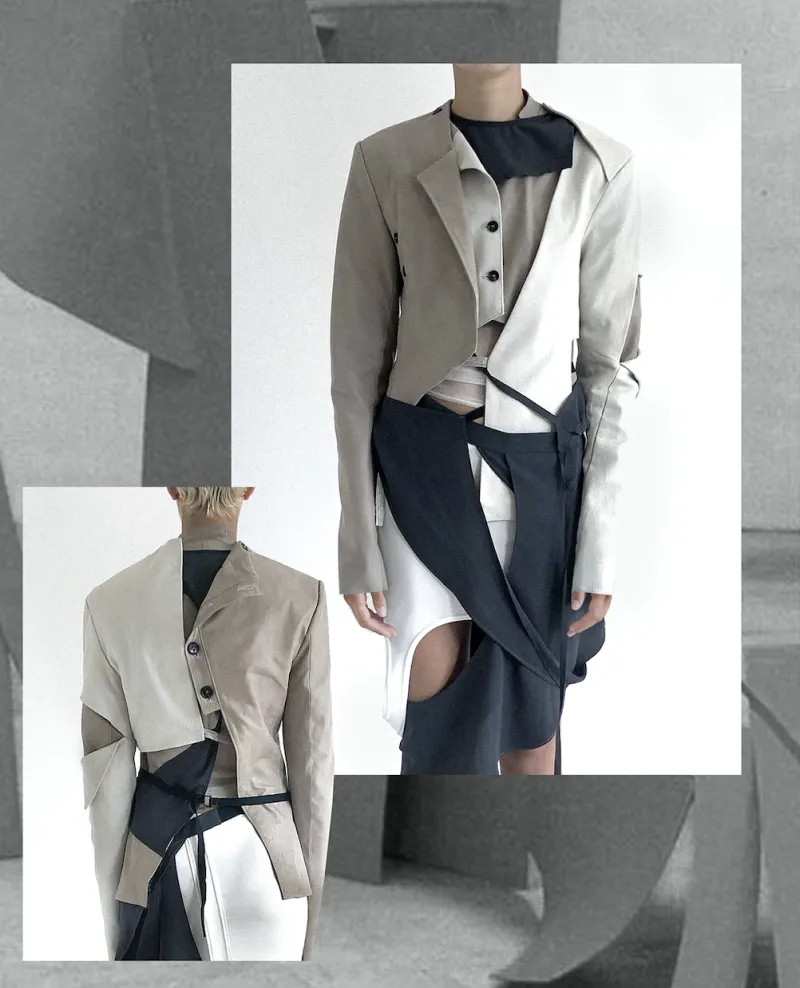
Who Are You Getting Dressed For? A Guide to Building a Wardrobe That Knows All Your Selves

Photo: thesandiegomuseumofartcollection, Public domain, via Wikimedia Commons
The Closet Full of Strangers
Most of us have done it. You open your closet before a job interview, a first date, or a Sunday morning farmers market run, and nothing feels right. Not because you don't have enough clothes—you probably have plenty—but because the clothes you own seem to belong to different people. The work version of you. The weekend version. The person you were three years ago. The person you thought you'd become.
That disconnect isn't a shopping problem. It's a self-knowledge problem. And the solution isn't buying more—it's understanding how identity actually works, and then building a wardrobe that reflects it honestly.
You Are Not One Person (And That's the Point)
Here's something fashion rarely admits: you're multidimensional. You contain a professional self who needs to project competence and credibility. A social self who wants to feel relaxed and real. A creative self who uses clothing as a form of play. An athletic self who needs function without sacrificing feeling like yourself. Maybe a digital self—an online presence with its own aesthetic logic.
None of these versions of you is more "real" than the others. They're all you, operating across different contexts. The problem is that most wardrobes are built around one of these selves at the expense of the others. You've got a closet full of work clothes and nothing to wear to a backyard barbecue. Or you've got great weekend gear and nothing that makes you feel like yourself in a meeting.
A truly multidimensional wardrobe doesn't flatten you into a single context. It moves with you.
Start With the Archaeology
Before you think about adding anything new, try going backward. Pull out the pieces you actually reach for—the ones that have survived multiple closet purges, the ones you feel genuinely good in regardless of the occasion. Look at them together. What do they have in common?
Maybe they're all in a similar color palette without you ever consciously choosing one. Maybe they share a silhouette—relaxed but structured, or fitted but never restrictive. Maybe they're all made from materials that feel good against your skin. Whatever the thread is, that's your aesthetic DNA. That's the part of your style that's consistent across contexts, even when everything else shifts.
This is your foundation. Everything you build from here should connect back to it.
Mapping Your Dimensions
Once you know your foundation, you can start mapping the specific demands of each dimension of your life. Try this: write down the five most common situations you get dressed for in a given month. Not the aspirational ones—the actual ones. For a lot of people in the US right now, that list looks something like: remote work days, in-office days, casual social plans, exercise, and something vaguely described as "errands."
For each situation, ask yourself two questions. What does this context require functionally? And how do I want to feel in it?
The functional requirements are usually obvious. The feeling question is where most people get stuck—and where the most interesting style decisions get made. Maybe you want your work-from-home days to feel more intentional, so you reach for something that reads as put-together even on camera. Maybe your gym clothes need to make you feel athletic before you even start moving, because that psychological shift matters to your performance.
When you know what each dimension actually needs, you can start identifying pieces that bridge them.
The Bridge Piece Strategy
The most valuable items in a 4D wardrobe aren't the ones that work perfectly in one context. They're the ones that work well across two or three. A well-cut trouser that reads as professional at work but pairs with a vintage tee on the weekend. A structured bomber that layers over a dress for a night out but also works over a hoodie on a cold Saturday. A quality sneaker that can go from a creative agency to a coffee run without a costume change.
These bridge pieces are doing heavy lifting, and they're worth investing in. When you find one, you'll know—it's the item that quietly makes everything else in your closet more functional.
Look for bridge pieces by asking: could I wear this in at least two of my five contexts without it feeling wrong? If yes, it earns its space.
Your Online Self Counts Too
This is 2024, and pretending your digital presence doesn't intersect with your physical wardrobe is a little naive. Whether you're on LinkedIn, Instagram, TikTok, or just showing up on Zoom calls three times a week, what you wear on camera is part of your style identity now.
Some people have figured this out intuitively—they dress for the camera angle, they think about how colors read on screen, they've developed a kind of visual shorthand for their online persona. Others haven't thought about it at all and wonder why their self-presentation feels inconsistent.
You don't need a separate wardrobe for your digital life, but you do need to acknowledge it as one of your dimensions. A few pieces that photograph well, that feel like you on screen as much as they do in person, go a long way toward making your overall style feel coherent across all the spaces you inhabit.
Confidence Is a Design Feature
Here's the thing about building a wardrobe that genuinely reflects all of who you are: it changes how you move through the world. When you stop getting dressed as an afterthought and start treating it as a form of self-knowledge, something shifts.
You stop feeling like you're wearing a costume in certain situations. You stop apologizing for your aesthetic or downplaying it to fit in. The version of you that shows up to a job interview and the version that shows up to a friend's birthday dinner start to feel like the same person—because they are, just in different contexts.
That coherence isn't superficial. It's confidence, and it's earned through actually understanding yourself well enough to dress accordingly.
A Few Practical Starting Points
If this all sounds good in theory but you're not sure where to begin, start small:
- Do a one-week wear audit. Note what you actually put on each day and how it made you feel. Patterns will emerge fast.
- Identify your one most neglected dimension. Which version of yourself is least represented in your closet? Start there.
- Find one bridge piece. Just one item that spans two contexts you currently dress for separately. Notice how much mental load it removes.
- Stop buying aspirationally. That blazer for the life you think you should be living isn't serving the life you actually have. Dress for your real dimensions first.
Your wardrobe is a living document. It should grow and shift as you do—not stay frozen in a version of yourself you've already moved past. The goal isn't a perfect closet. It's an honest one.