Color Before Coffee: How the Sequence of Hues in Your Closet Is Quietly Running Your Mood
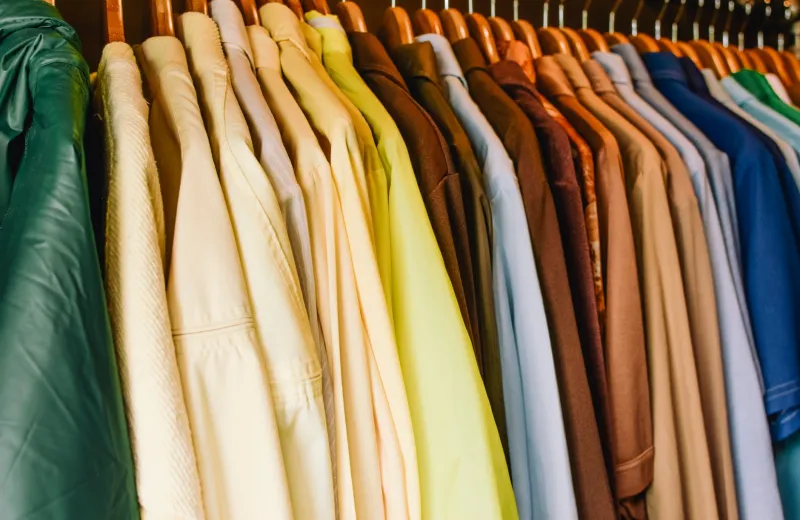
Most of us don't think about the inside of our closet as a tool. It's storage. It's the place where the hanger always falls off the rod at 7:45 a.m. when you're already running late. But what if the layout of that space — specifically the sequence of colors hanging in it — was doing something to your brain every single morning before you'd even poured your first cup?
Turns out, it probably is.
Neuroscientists and color psychologists have been building a pretty compelling case that color exposure triggers measurable neurological responses — affecting cortisol levels, dopamine release, and even the speed at which we make decisions. And if your closet is the first visually complex environment you encounter each day, that means the color arrangement in it is functioning like a kind of silent, ambient instruction set for your nervous system.
That's a lot of power to hand over to something you've probably never intentionally designed.
What Your Brain Is Actually Doing When You Open That Door
Here's the quick neuroscience: color perception isn't passive. When your eyes register a hue, your brain is already doing interpretive work — cross-referencing memory, emotional association, and context to assign meaning. That process triggers real physiological responses. Warm reds and oranges can elevate heart rate and signal alertness. Cool blues and greens tend to lower cortisol and promote a sense of calm. Saturated, high-contrast colors demand more cognitive processing than muted, analogous ones.
Now imagine opening a closet where bold reds are jammed next to neons, which crash into dusty earth tones, which somehow end up next to three different shades of black. Your brain isn't just looking at clothes — it's trying to resolve a visual argument. And that cognitive friction, however minor it seems, is burning decision-making energy before you've made a single actual choice about what to wear.
This is sometimes called decision fatigue by proxy. You're not deciding anything yet, but the visual noise is already taxing the same mental resources you'll need for the next eight hours.
The Dopamine Hit Is Real — But Only If You Set It Up Right
Here's where it gets interesting. Dopamine — the neurotransmitter associated with reward, motivation, and pleasure — is released not just when we get something we want, but when we anticipate getting it. The moment you spot a color you love in your closet, before you've even reached for the hanger, your brain is already rewarding you.
But that response is muted — or even blocked — when the visual environment is chaotic. Dopamine hits from color require contrast and clarity. A favorite cobalt blue blazer buried between similar-toned navy jackets and a denim shirt doesn't register the same way as that same blazer given breathing room next to a section of neutrals. The brain needs visual hierarchy to generate the little spark of anticipation that makes getting dressed feel good rather than like a chore.
Strategic color sequencing is essentially the practice of engineering that spark intentionally.
How to Build a Closet That Works With Your Brain, Not Against It
Start With Emotional Zones, Not Just Spectrum Order
A lot of organizing advice tells you to arrange your closet in rainbow order — ROY G BIV, basically. And while that creates visual harmony, it doesn't necessarily account for how you respond to color, which is deeply personal and culturally influenced.
Instead, start by sorting your clothes into rough emotional categories: energizing, calming, and neutral. Energizing pieces might be brights, warm tones, high-contrast patterns. Calming pieces are typically muted, cool, or monochromatic. Neutrals are your foundation — the pieces that don't register as emotionally loaded in either direction.
Once you've got those piles, you can think about placement. Where does your eye land first when you open the closet? That's your prime real estate. What do you typically need in the morning — a jolt of energy or a soft entry into the day? Put the corresponding emotional zone there.
Use Gradient Transitions to Reduce Visual Friction
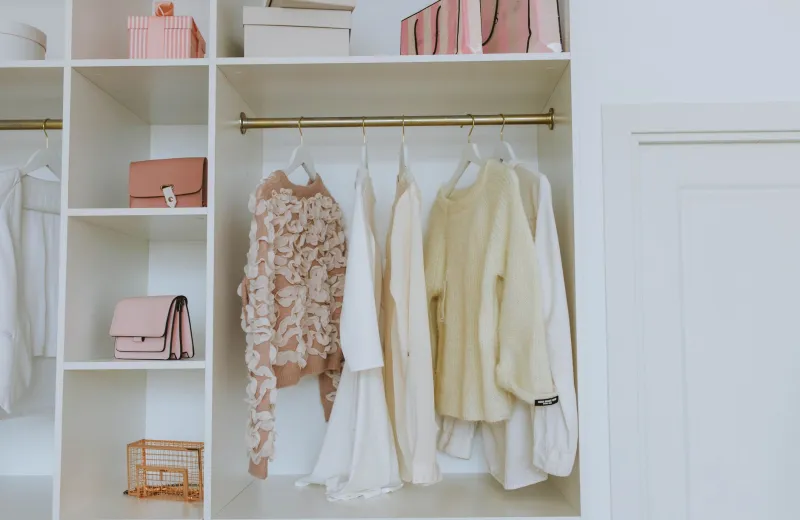
Hard color breaks — where one section ends and a totally different palette begins with no transition — create the visual equivalent of a jump cut. The brain notices. Instead, let colors bleed into each other gradually. If you're moving from warm tones to cool ones, run them through a neutral buffer: cream, tan, gray, or white pieces that give your eye a moment to recalibrate.
This isn't just aesthetically pleasing. It's cognitively efficient. The smoother the visual journey through your closet, the less processing overhead your brain spends navigating it.
Anchor Your Most-Worn Pieces With Intentional Color Neighbors
Pay attention to which pieces you reach for most often on autopilot. Those are your wardrobe anchors, and they should be surrounded by colors that either complement or intentionally contrast them in a way that opens up outfit possibilities rather than closing them down.
If your go-to is a warm camel coat, flanking it with burgundy on one side and ivory on the other creates instant visual outfit logic. Your brain starts connecting the dots before you've consciously thought about it, which speeds up decision-making and — this matters — makes the process feel more intuitive and satisfying.
Create a "Mood Ramp" for Different Times of Day
This one's a little more advanced but worth trying. If you have the closet space, consider organizing sections by when you typically wear them — morning commute pieces, work-from-home layers, evening or going-out options. Within each section, sequence the colors to match the emotional register of that time of day.
Softer, cooler tones for the morning section. More saturated or expressive hues in the evening area. This creates what's essentially a color narrative that moves with your day, making each transition feel less like a disruption and more like a natural shift.
The Bigger Picture: Your Closet as a Designed Environment
At 4D Apparel, we think about clothing as existing across multiple dimensions — not just the physical garment, but the context, the emotion, and the lived experience of wearing it. Your closet is part of that system. It's the first environment your outfit inhabits before it ever touches your body, and the way that environment is designed has real consequences for how you feel and function.
Treating color sequencing as a serious design choice — not just a tidying preference — is one of the highest-leverage, lowest-cost upgrades you can make to your daily routine. You're not just organizing fabric. You're programming the first emotional input of your day.
And honestly? That's worth spending an afternoon on.
The clothes haven't changed. But the experience of getting dressed absolutely can.