Not Every Piece Lives on the Same Clock: The Case for Wardrobe Frequency Intelligence
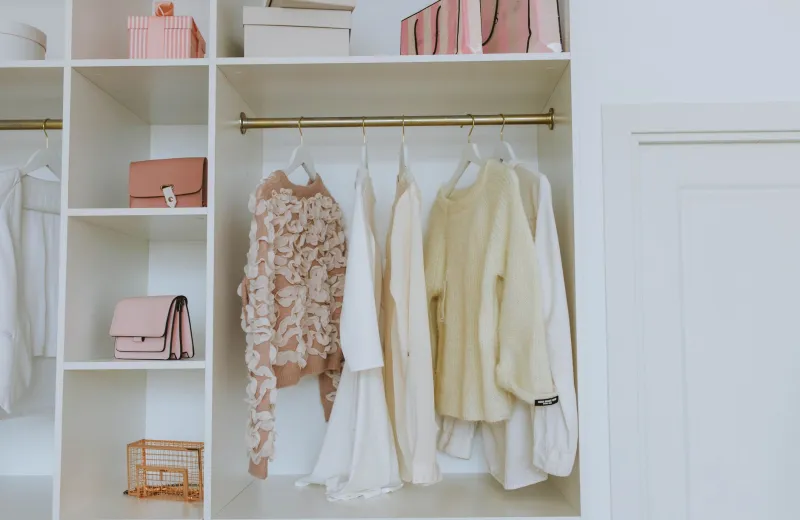
Here's something most style advice completely glosses over: the clothes in your closet don't all want to be treated the same way. That vintage denim jacket hanging in the back? It has a completely different relationship with time than the white linen shirt you reach for every other week. Your go-to sneakers operate on a different cycle than the tailored blazer you pull out for something specific. And yet, most of us manage our wardrobes like everything runs on the same schedule — rotating everything equally, washing everything at the same intervals, replacing things based on how long they've been hanging there rather than how they've actually been used.
That's leaving a lot on the table. When you start thinking about what we'd call wearing frequency intelligence — the idea that every piece has an optimal usage pattern — your wardrobe stops being a static collection and starts functioning like a living system.
The Three Speeds of a Wardrobe
Let's break it down simply. Most garments fall into one of three broad frequency categories, and each one demands a different approach.
High-frequency pieces are the ones you wear multiple times a week. Think everyday tees, your most-worn jeans, go-to sneakers, that one hoodie that just works with everything. These items are doing serious labor. They need to be durable, easy to care for, and versatile enough to absorb repeated use without looking tired. The mistake most people make here is under-investing. Because these pieces feel casual or basic, there's a temptation to buy cheap. But these are exactly the garments where quality pays off the most — the ones where a slightly better construction or fabric actually translates into months of extra life.
Mid-frequency pieces operate on a weekly or bi-weekly rhythm. A great pair of trousers, a statement blouse, your reliable casual blazer. These are the items that give your wardrobe its range. They're not on daily rotation, but they show up consistently enough that they define a big chunk of your visual identity. This category benefits most from intentional pairing — these are the connective tissue pieces that can bridge your high-frequency basics with the stuff you wear less often.
Low-frequency pieces are the slow-burn players. A structured coat. A particular silk dress. That one piece you bought because it felt exactly right, even if you couldn't immediately picture where it fit. These garments often get underused not because they're wrong for your life, but because people don't give them enough time to integrate. The magic of low-frequency pieces is that they reveal themselves gradually — you figure out exactly when and how to wear them through repeated, patient experiment over months, not days.
Why Frequency Mismatches Kill Outfits
One of the most common wardrobe frustrations — that feeling of having nothing to wear despite a full closet — often comes down to frequency mismatch. You've got a bunch of low-frequency statement pieces with no high-frequency basics to anchor them. Or you've loaded up on mid-frequency items that don't have enough range to connect to each other. The whole system gets clogged.
Think of it like a playlist. If every song is a big dramatic ballad, nothing lands. You need tempo variation. Your wardrobe needs the same thing — pieces operating at different speeds so the whole thing has rhythm and movement.
This is actually one of the core ideas behind multidimensional dressing: your outfit isn't just about what looks good in a single moment. It's about how pieces interact over time, across contexts, in combination with each other. That's a 4D problem, not a 2D one.
Recalibrating Your Relationship With Each Piece
So how do you actually apply frequency intelligence practically? A few starting points:
Track your actual wear patterns, not your intentions. A lot of people organize their closet based on what they think they'll wear. Reality usually looks different. Pay attention for a few weeks — what are you actually reaching for? That data is more useful than any style theory.
Match care routines to frequency, not just to fabric. High-frequency pieces need more maintenance attention, but also more careful washing to prevent premature wear. Low-frequency pieces need periodic airing out and checking even when they're not in rotation — fabrics can degrade sitting unused, especially in humid climates.
Give low-frequency pieces a dedicated integration period. If you buy something that feels right but doesn't immediately slot into your rotation, commit to actively trying it for a full season before deciding it doesn't work. Some pieces need three or four wearings before you understand them. The first time you wear something new, you're still figuring out the fit, the movement, the styling. By the fifth time, you might have something genuinely special.
Rotate your high-frequency pieces intentionally. If you have three or four items in the same frequency tier — say, four pairs of everyday jeans — actually cycling through them deliberately extends the life of each one significantly. Fabric needs rest. Giving each piece a day off isn't just good maintenance; it keeps everything looking fresher longer.
The Seasonal Reset as a Frequency Audit
Twice a year — when the weather shifts and you're naturally pulling out or putting away seasonal items — is the perfect moment to do a frequency audit. Pull everything out. Separate it by how often you actually wore it over the past six months, not by category or color or style. Be honest.
The stuff in your low-frequency pile falls into two groups: pieces that belong there (the slow-burn investments doing exactly what they should) and pieces that ended up there by accident (things you thought you'd wear more, things that don't actually connect to anything else you own). The second group is where you make decisions — style adjustments, better integration strategies, or honest edits.
This isn't about minimalism for its own sake. It's about making sure every piece in your closet is operating at its intended frequency and actually contributing to the system.
Your Wardrobe Has a Tempo — Learn It
The best wardrobes aren't the biggest ones or the most expensive ones. They're the ones where the owner actually understands what they have. That means knowing which pieces are your daily drivers, which ones need time to reveal themselves, and which ones are doing the connective work in between.
When you treat your closet like a dynamic system with different parts moving at different speeds, the whole thing starts to feel more alive. Outfits come together more intuitively. Pieces last longer because they're being used and cared for correctly. And that low-frequency jacket in the back? Give it enough time and the right context, and it might end up being the piece that defines your whole look this year.
Frequency intelligence isn't a complicated concept. It's just paying attention to the actual rhythm of your wardrobe instead of treating everything like it lives in the same dimension.