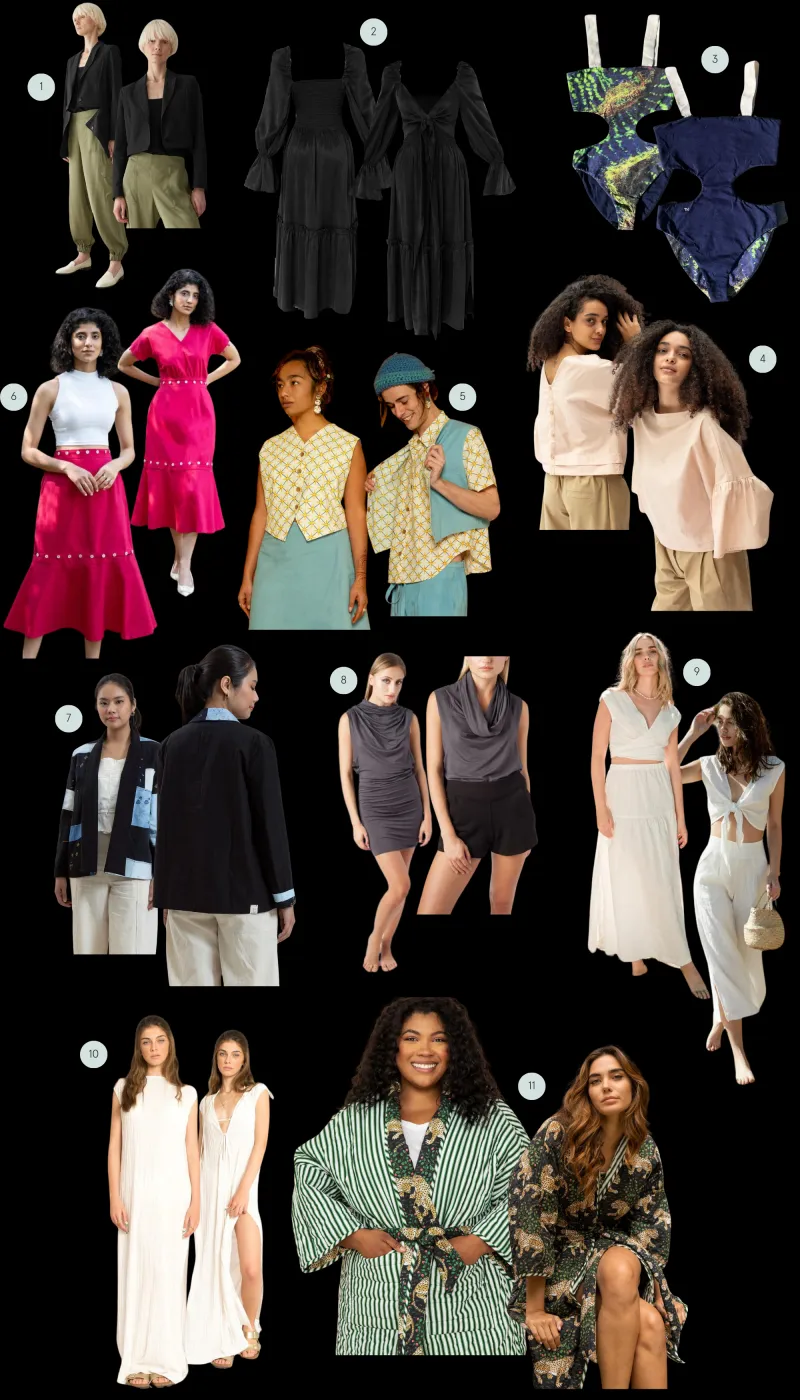
More Is More: The Strategic Case for a Bigger, Smarter Wardrobe

Photo by Photo by jordi pujadas on Unsplash on Unsplash
Somewhere along the way, minimalism became fashion's moral high ground. Capsule wardrobes got praised like a form of self-discipline. Owning fewer clothes started to signal intelligence, intentionality, even spiritual clarity. And sure, there's real value in decluttering the chaos. But the minimalism gospel has a blind spot — one that's been quietly frustrating a lot of people who tried the 33-item wardrobe and still stood in front of their closet every morning feeling completely stuck.
Here's the thing nobody in the "less is more" camp wants to admit: decision fatigue isn't always caused by too many options. Sometimes, it's caused by the wrong options — pieces that don't connect, don't flex, and don't actually reflect who you are across the full spectrum of your daily life. That's a curation problem, not a quantity problem.
At 4D Apparel, we think about clothing in four dimensions — not just how something looks, but how it moves through your life across time, context, function, and identity. And when you start building a wardrobe through that lens, abundance stops being the enemy. It becomes the whole point.
The Real Reason You Feel Overwhelmed Every Morning
Let's get honest about what decision fatigue actually looks like in a closet context. It's not usually "I have too many great options and I can't choose." It's more like "I have a lot of things, but nothing feels right for right now." That's a fundamentally different problem.
Research on choice overload — famously explored by psychologist Barry Schwartz in The Paradox of Choice — is often cited to argue that fewer options lead to better decisions and more satisfaction. But Schwartz's findings are more nuanced than the minimalism crowd lets on. The paralysis kicks in when choices feel unrelated, when the stakes feel high, and when there's no clear framework for deciding. Remove those conditions, and more choices can actually increase confidence and satisfaction.
A wardrobe full of multidimensional pieces — things that work across occasions, layer intuitively with each other, and shift in feel based on how you style them — creates exactly that kind of framework. When your clothes are designed to connect, the math changes entirely.
What "Multidimensional" Actually Means in Your Closet
When we talk about multidimensional dressing, we're not just throwing around a buzzword. We mean pieces that operate on more than one axis simultaneously.
Take color as the first dimension. A wardrobe built around a thoughtful color story — not necessarily neutral, but cohesive — means that almost anything can go with almost anything else. You're not hunting for a match; you're choosing from a curated palette where combinations naturally emerge.
Texture is the second dimension. When you have pieces in varying weights and surfaces — a matte knit, a slightly shiny twill, a soft brushed cotton — you can create visual depth and outfit interest without introducing new colors or silhouettes. Two pieces in the same tonal family read completely differently depending on texture contrast.
Functionality is the third. Pieces that move between contexts — a blazer that works in a boardroom and a bar, a dress with enough structure for a work meeting but enough ease for a weekend farmers market run — multiply your wardrobe's effective size without multiplying its physical footprint.
Occasion flexibility is the fourth. When you stop buying things for one specific scenario and start investing in pieces that bend across your life, getting dressed stops being a logistical puzzle and starts feeling like a creative act.
The paradox? The more of these kinds of pieces you own, the easier getting dressed becomes. Because every addition increases the number of possible combinations rather than the number of isolated, single-use items.
Why Minimalism Keeps Failing People
The capsule wardrobe concept is beautiful in theory. In practice, it tends to work really well for people whose lives are relatively uniform — those with consistent dress codes, predictable social calendars, and a single dominant aesthetic. For everyone else? It creates a different kind of stress.
If you work a creative job in the morning, hit the gym at lunch, have a client dinner in the evening, and volunteer on weekends, a 30-piece wardrobe isn't liberating — it's a constraint that forces constant compromise. You end up either underdressed or overdressed for half your life, which isn't exactly the confident, intentional vibe minimalism promised.
The real issue is that minimalism was designed around a two-dimensional idea of clothing: you have X items, and you wear them. But real life is four-dimensional. It moves. It shifts. It surprises you. Your wardrobe needs to move with it.
Building Abundance That Doesn't Overwhelm
The goal isn't to fill your closet to bursting with random pieces. Strategic abundance has a specific architecture.
Start with anchors. These are your highest-versatility items — the pieces that connect everything else. Think of them as the hubs in a network. A well-cut trouser in a neutral that photographs as slightly different depending on the light. A shirt in a color that happens to work with every bottom you own. These pieces don't need to be boring; they need to be connective.
Layer in dimension-adders. Once your anchors are in place, add pieces specifically chosen to expand what those anchors can do. A printed layer that transforms a simple base outfit. A textured outer piece that shifts the formality register of anything underneath it. Each addition should multiply combinations, not just add one more isolated look.
Edit by function, not by count. Instead of asking "do I have fewer than 37 items?" ask "does every piece in here have at least two clear uses in my actual life?" That's a much more useful filter. Something that only works for one specific occasion is deadweight, regardless of how much you love it.
Organize for speed. A big wardrobe only creates decision fatigue if it's disorganized. Color-code your hanging items. Group by occasion zone. Keep your highest-rotation pieces front and center. When your closet is visually navigable, abundance becomes an asset — you can actually see your options and make quick, confident choices.
The Confidence Argument
Here's something the minimalism conversation consistently undervalues: the psychological power of having exactly the right thing for the moment you're in.
There's a particular confidence that comes from reaching into your closet and pulling out something that fits the occasion perfectly — not "this will have to do" but "yes, this is exactly right." That feeling is hard to manufacture with a limited wardrobe, because a limited wardrobe, by definition, can't perfectly fit every moment.
When your collection is broad enough and well-curated enough to cover your whole life with intention, getting dressed stops being a source of low-grade stress and starts being a genuine daily pleasure. That's not a luxury. That's the whole point of caring about clothes in the first place.
The closet paradox isn't really a paradox at all. It's just a reframe. More choices, when those choices are smart, connected, and built for the full dimensionality of your life, don't overwhelm you. They free you. And that's a fashion philosophy worth building a wardrobe around.