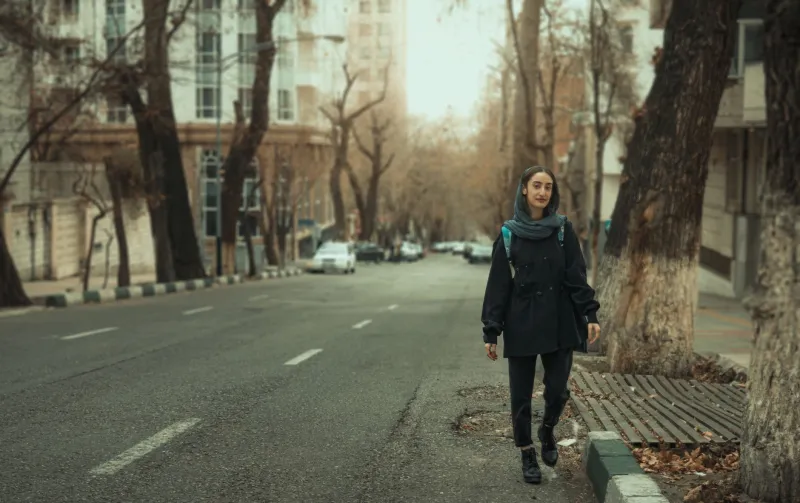
The Trend Calendar Is Dead and Gen Z Killed It
Photo: "M. E. Thalheimer" via Internet Archive Book Images, CC0, via Wikimedia Commons
For most of modern history, getting dressed in America meant participating in a synchronized ritual. Twice a year, the arbiters of style issued their verdicts. Magazines declared the colors. Department stores rearranged the floors. And millions of people, whether they admitted it or not, updated accordingly.
That machine is sputtering. Not because fashion got less interesting — because the distribution of taste got radically more democratic, and the old calendar can't govern what it can't see.
From One Runway to Ten Thousand Feeds
The trend cycle depended on scarcity of information. When Vogue was the primary signal, everyone received the same message at the same time. Today, a kid in suburban Ohio can build an entire aesthetic identity off a niche hashtag that never touches a runway — gorpcore, coquette, dark academia, coastal grandmother, balletcore, whatever crystallizes next month.
These aren't trends in the traditional sense. They're micro-aesthetics: complete visual languages with their own silhouettes, color logic, and values, sustained by communities rather than seasons. A micro-aesthetic doesn't expire when the calendar flips. It evolves when the community does.
The result is something fashion theorists didn't quite predict: a post-trend landscape where multiple aesthetic worlds run in parallel, none of them dominant, all of them available. Choosing one is less about keeping up and more about opting in.
Identity as a Curated Project
Here's what I find genuinely fascinating about this shift: it changes what clothes are for.
Under the trend system, dressing well meant being current. Under the micro-aesthetic system, dressing well means being legible — signaling, accurately, who you are to the people who'd recognize it. Your fit is less a fashion statement than a membership card.
That's a heavier lift, in a way. You can't outsource it to a seasonal lookbook. It requires actually knowing yourself, experimenting, and building a wardrobe as an ongoing project rather than a series of purchases. The people doing this well aren't the ones with the biggest budgets. They're the ones with the clearest sense of their own visual language.
There's a real upside here, too. When trends stop dictating, clothes stop shaming. The jacket you bought in 2019 isn't "out" — it's yours, integrated into an aesthetic that only you are running. Longevity stops being a sacrifice and becomes the point.
What This Breaks — and What It Builds
Let's not romanticize entirely. The old system, whatever its conformity, gave people a shared culture. Walk into any high school in 1998 and you could read the social order off the clothing. Today's landscape is more fluid and more fragmented, which can be liberating or lonely depending on the day.
Retail, meanwhile, is whiplashing. The buyers and merchandisers whose entire profession was built around the spring/fall rhythm are now staring at demand signals that spike overnight and vanish just as fast. The winners are the brands that stopped asking "what's the trend?" and started asking "which communities are forming, and what do they need?" — smaller drops, faster feedback, deeper fluency in aesthetics they didn't invent.
The Fourth-Dimensional Wardrobe
At 4D Apparel, we think the death of the trend calendar is the best thing to happen to personal style in generations. A trend tells you what to wear. An aesthetic tells you who you are. One is a deadline; the other is a dimension.
The most stylish Americans right now aren't the ones wearing what's new. They're the ones wearing something coherent — a wardrobe with internal logic, built over time, tuned to a self that keeps evolving. That's not fashion as consumption. That's fashion as authorship.
The calendar is dead. Long live the closet.